7 Sicbo Strategies That Turn Luck Into Real Wins
Sicbo strategies separate the players who last three hours from the players who last three minutes. The dice are random, but the way you approach them is not. Bet selection, stake sizing and knowing exactly when to stop all shape how much value you pull out of a session. This guide breaks down the methods experienced players actually rely on, the quiet mistakes that drain a balance, and how to apply everything on the live tables at tài xỉu.
Why most players lose before their Sicbo strategies begin
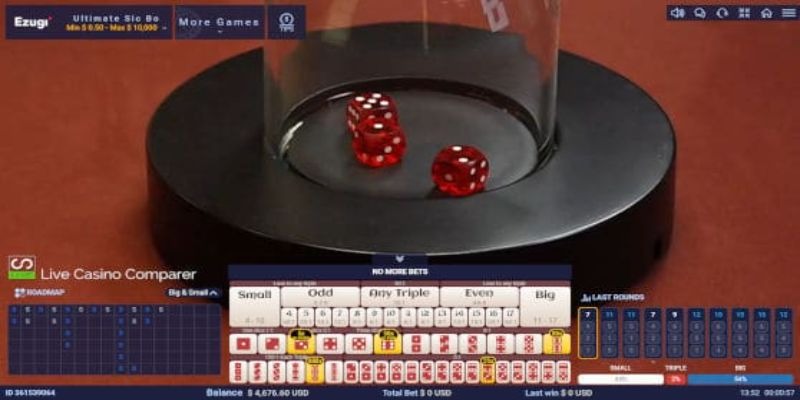
Common mistakes players make when applying Sicbo strategies at the table
Before talking about what works, it helps to understand what fails, because most losing sessions are decided by habits rather than by the dice themselves.
The first and most damaging habit is chasing. A player at tài xỉu loses two or three rounds on Big, then jumps to a Specific Triple hoping one 180:1 hit erases everything. That single decision converts a 2.78% house edge into something close to 16%, and it usually happens in the exact moment when the bankroll can least afford it.
The second habit is ignoring payout maths entirely. Many players assume a bigger payout means a better bet. In reality, Double and Triple bets carry the worst long term value on the board, while unglamorous options like Big, Small and two dice Combination bets sit at the friendly end of the scale. Any set of Sicbo strategies that ignores this hierarchy is just decoration.
Third, there is no session structure. Without a fixed budget, a bet size rule and a stopping point, every round becomes an emotional decision. Winners get greedy, losers get desperate, and both drift toward higher variance bets.
Finally, there is the belief that dice have memory. Five Smalls in a row does not make Big more likely on the sixth roll. Each shake resets completely. Recognising this is the foundation that all serious Sicbo strategies are built on, and it is also the reason a structured live table environment like tài xỉu rewards patience far more than instinct.
Core Sicbo strategies that balance risk and reward
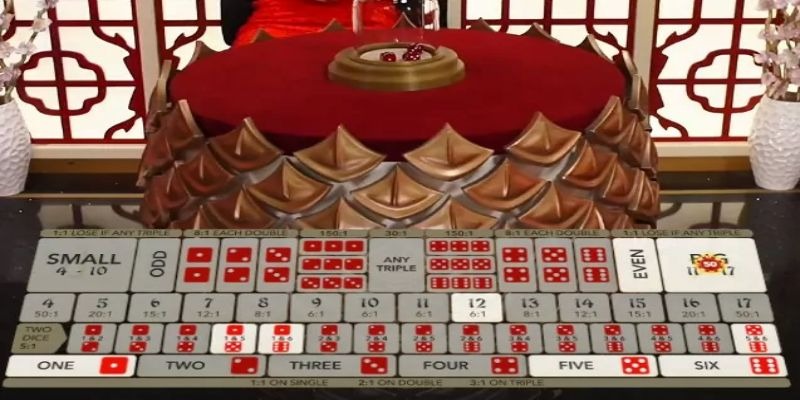
Core Sicbo strategies used by players to balance risk and steady returns
Once the bad habits are gone, you can build an approach that fits your temperament and your bankroll rather than copying whatever the loudest player at the table is doing.
Low risk foundation with Big and Small
This is the entry point for a reason. Small covers totals from 4 to 10, Big covers 11 to 17, and both pay 1:1 with a house edge of roughly 2.78%. Around 48% of rounds win, which means variance stays low and your balance moves in small, readable steps. The only catch is that any Triple beats both sides, which is why it should be treated as a base layer rather than a guaranteed shield.
Combination betting for spread coverage
Instead of putting everything on one outcome, you place one anchor bet on Big or Small and add a single two dice Combination bet, such as 3 and 5, which pays 6:1 at a similar low house edge. This creates two independent chances to win in the same round without inflating your total stake. Among all Sicbo strategies, this is the one that gives the best mix of steady returns and genuine upside, and it works particularly well across the multiple live tables available at tài xỉu.
Progressive staking with strict limits
The Martingale idea applies cleanly to even money Sicbo bets: after a loss you double, after a win you reset to your base stake. It recovers losses quickly during short cold runs, but it fails hard when a losing streak meets a table limit. Use it only with a base stake around 1% of your bankroll, and cap it at four consecutive doubles. Treated that way, progressive Sicbo strategies become a controlled tool instead of a countdown timer.
Bankroll rules that make Sicbo strategies last longer

Bankroll rules that keep your Sicbo strategies alive for longer sessions
A method is only as strong as the money management behind it, and this is the layer most players skip completely.
- Set the budget before the first roll. Decide the amount you are willing to lose for the session and treat it as spent the moment you sit down. Casual players usually do best with a smaller budget split across many low stake rounds, while high rollers can afford wider swings but still need a ceiling.
- Keep individual bets between 2% and 5% of that budget. With this range, a run of eight or nine losses is uncomfortable but survivable. Above 10% per round, a single bad stretch ends the session regardless of how sound your reasoning was. Consistent sizing is what allows the mathematical edge behind your Sicbo strategies to actually show up over enough rounds.
- Adjust with momentum, not with emotion. After a win, you can increase your stake by one small increment. After two consecutive losses, drop back to your base amount. This keeps profit exposed to good runs while shrinking exposure during bad ones, without the runaway risk of a full progression system.
- Define both a stop loss and a win target. Most players set a loss limit and no win target, which is why profitable sessions so often end at zero. A realistic target of 30% to 50% growth on your session budget gives you a clear exit. If you notice yourself increasing stakes to make back a specific number, that is the signal to close the table.
- Separate bankroll from bonus funds. Promotions and table game offers at tài xỉu can extend your playing time considerably, but only if you track them as a separate pool rather than blending them into your core budget.
Conclusion
Sicbo strategies work when they are boring, consistent and slightly conservative, which is the opposite of how most people play. Build your session around low edge bets like Big, Small and two dice Combinations, keep a small allocation for high payout bets purely for entertainment, size every stake as a fixed percentage of a budget you decided in advance, and hold yourself to both a loss limit and a win target. None of this guarantees a winning night, because nothing can, but it does guarantee that your results reflect the odds rather than your impulses. Apply this framework on the live tables at đánh bài ăn tiền and you will notice the difference in how long your sessions last and how controlled they feel.