The Science Behind Effective Water Damage Cleanup
The first instinct is frequently to clean up the mess and move on when water unexpectedly floods a house or place of business, whether due to a burst pipe, a strong storm, or an appliance malfunction. But proper recovery requires more than surface drying. Behind every successful restoration effort is a foundation of scientific principles that guide the removal of moisture, the prevention of further damage, and the restoration of a safe, healthy environment. Successful water damage cleanup relies on understanding how moisture interacts with various building materials to ensure thorough drying and prevent long-term complications.
Understanding the science involved in moisture behavior, air movement, and material response helps explain why trained professionals are critical in managing these situations appropriately.
Moisture Migration: Why It’s Harder Than It Looks?
Water doesn’t stay put. The moment it spills, it begins to migrate, seeping through cracks, wicking up drywall, soaking into flooring, and settling into insulation. This behavior is governed by capillary action and gravity, meaning it can move in multiple directions and reach areas far from the original spill point.
For example, even if the surface looks dry, water may be trapped behind baseboards, under floorboards, or within wall cavities. That’s why visual inspections are never enough. Moisture meters and infrared imaging are used to detect saturation levels beneath the surface and identify hidden threats before they turn into mold colonies or structural decay.
Evaporation And Humidity Control
Once excess water is physically removed, the next challenge is reducing moisture from materials and air through evaporation. However, simply opening windows or using household fans rarely does the job. That’s because drying involves manipulating the environment to promote fast and controlled evaporation.
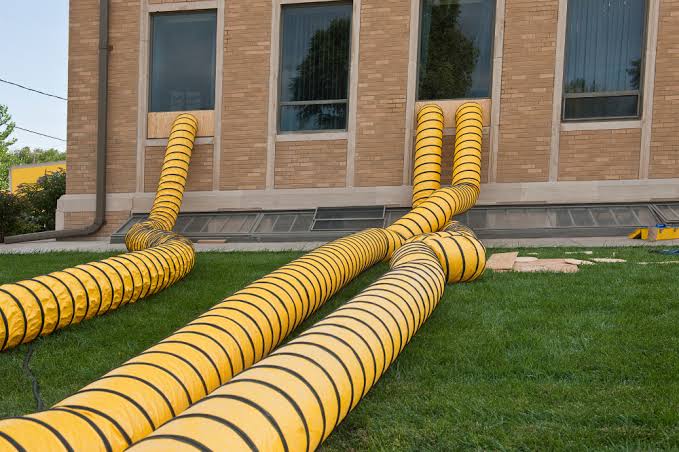
Professional drying involves three main components: airflow, temperature, and humidity. Industrial-grade air movers are positioned strategically to create circular airflow across wet surfaces, accelerating evaporation. Dehumidifiers are then used to capture this evaporated moisture from the air, preventing it from re-condensing on cooler surfaces.
Meanwhile, temperature control ensures optimal conditions for the drying process. Warmer air holds more moisture, which supports faster evaporation—up to a point. If the environment is too hot or too dry, some materials may dry too quickly on the surface while remaining damp inside.
Material Science And Drying Techniques
Different materials respond to water in different ways. Hardwood may swell and buckle, drywall may crumble, and insulation can become a breeding ground for bacteria. Knowing how each material reacts allows technicians to choose the right drying method.
For example, dense materials like concrete take longer to dry and require longer exposure to air movement and dehumidification. Porous materials may need to be removed if saturation is too severe. Delicate finishes or structural components often demand slower, more controlled drying to avoid cracking or further damage.
Professionals use industry standards such as those set forth by the Institute of Inspection, Cleaning and Restoration Certification (IICRC) to decide which materials need to be replaced and which can be saved.
Microbial Prevention And Sanitization
Moisture creates the perfect environment for microbes to thrive. Mold, mildew, and bacteria can begin developing within 24–48 hours of exposure to water. This makes decontamination a critical part of the process—not just for cleaning but for health and safety.
Professionals use EPA-registered antimicrobial treatments to sanitize affected surfaces and prevent microbial growth. HEPA filters and air scrubbers may also be used to trap airborne spores during the drying and cleaning phases. This step is especially important when the water involved is classified as “gray” or “black,” indicating contamination.
Continuous Monitoring And Adjustments
Water recovery isn’t a set-it-and-forget-it operation. Conditions change quickly, and ongoing monitoring is essential to ensure successful drying. Technicians take daily readings of humidity levels, temperature, and material moisture content. Based on these metrics, they adjust equipment placements, airflow patterns, and drying strategies.
Without this scientific precision, areas can be missed or dried unevenly, leading to lingering moisture and long-term issues.
Conclusion
Effective water damage cleanup isn’t just about removing water—it’s about understanding how water behaves, how materials respond, and how the environment must be manipulated for safe, complete recovery. By applying proven scientific principles and using specialized tools, restoration professionals ensure that buildings are not only dry on the surface but truly restored from the inside out. It’s this commitment to science-backed methods that separates temporary fixes from lasting solutions.